
A Multifaceted Atonement (Part 3): Vicarious Repentance
Only a bad man needs repentance, but only a good man can do it

“In the days of His flesh, He offered up both prayers and supplications with loud crying and tears to the One able to save Him from death, and He was heard because of His piety. Although He was a Son, He learned obedience from the things which He suffered. And having been made perfect, He became to all those who obey Him the source of eternal salvation, being designated by God as a high priest according to the order of Melchizedek.”
-Hebrews 5:7-10
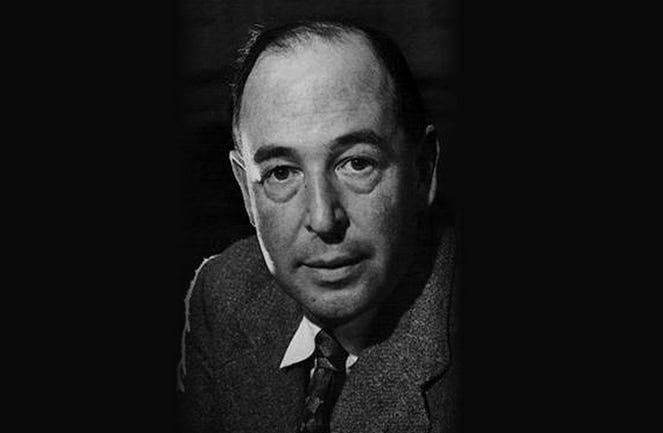
Recapitulation gave us the Wide Angle View of the atonement, the Patristic Atonement Model gave us an explanation of the exact mechanism, but Vicarious Repentance focuses on our individual experience of salvation. The following is from CS Lewis’ Mere Christianity, the chapter called “The Perfect Penitent.”
We are told that Christ was killed for us, that His death has washed out our sins, and that by dying He disabled death itself. That is the formula. That is Christianity. That is what has to be believed. Any theories we build up as to how Christ’s death did all this are, in my view, quite secondary: mere plans or diagrams to be left alone if they do not help us, and, even if they do help us, not to be confused with the thing itself. All of these theories are worth looking at.
The one most people have heard is the one I mentioned before – the one about our being let off because Christ has volunteered to bear a punishment instead of us. Now on the face of it that is a very silly theory. If God was prepared to let us off, why on earth did He not do so? And what possible point could there be in punishing an innocent person instead? None at all that I can see, if you are thinking of punishment in the police court sense. On the other hand, if you think of a debt, there is plenty of point in a person who has some assets paying on behalf of someone who has not. Or if you take ‘paying the penalty,’ not in the sense of being punished, but in the more general sense of ‘standing the racket’ or ‘footing the bill’, then, of course, it is a matter of common experience that, when one person has got himself into a hole, the trouble of getting him out usually falls on a kind friend.
Now what was the sort of ‘hole’ man had got himself into? He had tried to set up on his own, to behave as if he belonged to himself. In other words, fallen man is not simply an imperfect creature who needs improvement: he is a rebel who must lay down his arms. Laying down your arms, surrendering, saying you are sorry, realizing that you have been on the wrong track and getting ready to start life over again from the ground floor – that is the only way out of our ‘hole’. This process of surrender – this movement full speed astern – is what Christians call repentance. Now repentance is no fun at all. It is something much harder than merely eating humble pie. It means unlearning all the self-conceit and self-will that we have been training ourselves into for thousands of years. It means killing part of yourself, undergoing a kind of death. In fact, it needs a good man to repent: only a good person can repent perfectly. The worse you are the more you need it and the less you can do it. The only person who could do it perfectly would be a perfect person – and he would not need it.
Remember, this repentance, this willing submission to humiliation and a kind of death, is not something God demands of you before He will take you back and which He could let you off if He chose: it is simply a description of what going back to Him is like. If you ask God to take you back without it, you are really asking him to let you go back without going back. It cannot happen. Very well, then, we must go through with it. But the same badness which makes us need it makes us unable to do it. Can we do it if God helps us? Yes, but what do we mean when we talk of God helping us? We mean God putting into us a bit of Himself, so to speak. He lends us a little of His reasoning powers and that is how we think: He puts a little of His love into us and that is how we love one another. When you teach a child writing, you hold its hand while it forms the letters: that is, it forms the letters because you are forming them. We love and reason because God loves and reasons and holds our hand while we do it. Now if we had not fallen, that would be all plain sailing. But unfortunately we now need God’s help in order to do something which God, in His own nature, never does at all – to surrender, to suffer, to submit, to die. Nothing in God’s nature corresponds to this process at all. So that the one road for which we now need God’s leadership most of all is a road God, in His own nature, has never walked. God can share only what He has: this thing, in His own nature, He has not.
But supposing God became a man – suppose our human nature which can suffer and die was amalgamated with God’s nature in one person – then that person could help us. He could surrender His will, and suffer and die, because He was a man; and He could do it perfectly because He was God. You and I can do it only if He becomes man. Our attempts at this dying will succeed only if we men share in God’s dying, just as our thinking can succeed only because it is a drop out of the ocean of His intelligence: but we cannot share God’s dying unless God dies; and He cannot die except by being a man. That is the sense in which He pays our debt, and suffers for us what He Himself need not suffer at all. [1]
Objections
Scottish theologian Donald Macleod levels several objections towards this notion of vicarious repentance in his book Christ Crucified.
First, he charges that repentance cannot substitute for punishment. He says it is very improbable that, “repentance could constitute an adequate atonement. Certainly no human court would recognize it. An individual charged with causing death by dangerous driving might well be deeply penitent but such penitence would never be accepted as an alternative to a custodial sentence.” (p.206) There are three things wrong with this objection. The first is that for victims, the remorse and repentance of their offender may very well be more satisfying than punishment. If the victims had to choose between punishment without any remorse and repentance, OR remorse and repentance without any punishment, they very well might choose the latter. Second, punishment has added purposes when conducted within the context of societies. We need to establish effective deterrents for all individuals, and punishments do that in a way that repentance may not. But this is a criteria that applies to civil societies, not to eternal salvation. But the third, and most important, problem with Mcleod’s objection is that he attacks a straw man definition of “repentance” which is simply “saying sorry.” But that is not how Lewis defines repentance. He defines repentance as death and resurrection. In this case, the repentance actually contains within it the punishment for the sin, that is, the death. There is not as bright of a line between punishment and repentance as Macleod wants to make. To go through the repentance of death and resurrection is to undergo the punishment due to sin. This false critique of repentance is one that has persisted throughout church history. Both Athanasius and Anselm, to name just two, give reasons why repentance is not enough to atone for damage done. But they are critiquing a non-Christian view of repentance. Christian repentance is death and resurrection. It is the destruction of the sin and the restoration of what has been destroyed. Repentance is not simply saying sorry. Repentance is going through remorse, requiring the self-destruction of sin, and a commitment to restitution.
Macleod’s second objection is rather odd. He objects that Christ cannot repent on our behalf because he is innocent of our sins. This is curious, because this objection also cuts against penal substitution. Macleod had earlier argued in his book that Jesus’ death was effective because it was deserved. Because Jesus is our sin-bearer, he can suffer the punishment due our sins. But if Christ is innocent, then he cannot suffer the deserved punishment for our sin in our place. In sum, Mcleod’s objection is similar to John the Baptist’s objection to Jesus’ baptism. “This is a baptism of repentance for the forgiveness of sins! You don’t need to be baptized!” And yet, Jesus says that it is necessary to participate in our baptism—our baptism of repentance for the forgiveness of sins. If Jesus believed in vicarious repentance, then so should we.
Additionally, Jesus does “repent” in a sense in the Garden of Gethsemane. The prayer of “Not my will but Yours be done” that he prays as a sinless person enables the repentance of sinful persons. When we confess and repent, we pray with Jesus “Not my will but Yours be done.”
Additionally, as we will see in the upcoming series on advocacy, playing the role of the advocate does mean apologizing on behalf of someone else. Apologizing on behalf of someone else is vicarious repentance in action. It is the innocent repenting on behalf of the guilty.